
Tachiyomi
Tachiyomi: The Complete Guide to the Open-Source Manga Reader for Android
Tachiyomi is one of the most talked-about names in the manga-reading world — but also one of the most misunderstood. Search for it and you’ll find dozens of sites offering “official” downloads, conflicting claims about whether it still works, and confusing talk of forks like Mihon and TachiyomiSY. This guide cuts through that noise: what Tachiyomi is, how it actually works under the hood, what happened to it, and how to use it — or its successors — responsibly.
What Is Tachiyomi?
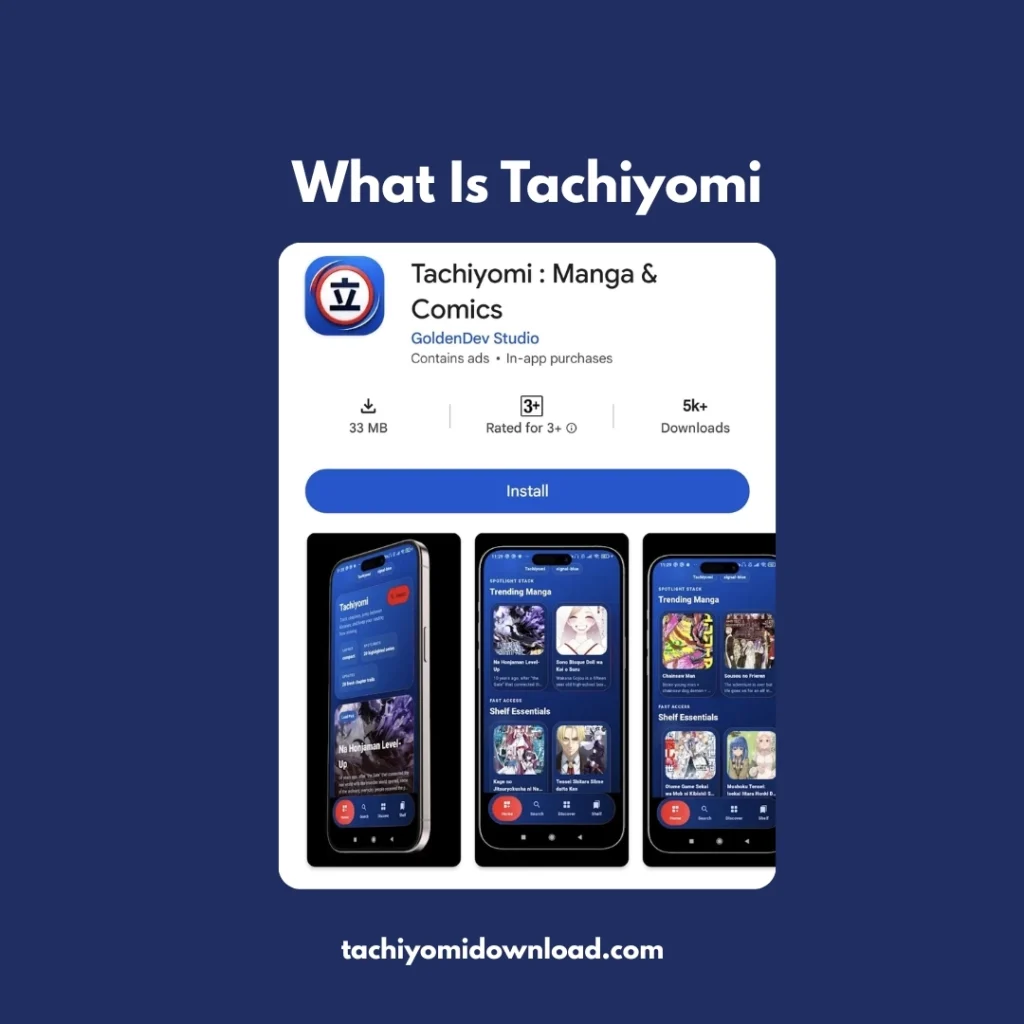
Tachiyomi is a free, open-source manga-reading app built for Android. Rather than hosting manga itself, it works as a reader and organizer that connects to separate “sources” — small extensions that each point to a different manga website. You install the base app, add the sources you want, and everything you follow shows up in one unified library.
Because it doesn’t host or own any content, Tachiyomi is best described as a client, similar to how a podcast app doesn’t host podcasts but lets you subscribe to feeds from many different creators. That distinction matters: the app itself is just software for organizing and displaying manga pages, while the actual comics come from whichever third-party sources a user chooses to add.
- Created by a developer known as inorichi, first released in the mid-2010s
- Fully open-source — its code is public and was maintained by a volunteer community
- Not distributed through the Google Play Store; installed directly ("sideloaded") as an APK file or via F-Droid
- Supports manga, manhwa, manhua, and some webtoon-style content
How Does Tachiyomi Actually Work?
Tachiyomi’s design separates two things that most manga apps bundle together: the reading experience and the content source. This is the single most important concept to understand about the app.
- Base app: handles your library, reading interface, bookmarks, download queue, and settings
- Sources (extensions): small installable add-ons that each connect to one manga website’s catalog
- Trackers: optional integrations with services like MyAnimeList, AniList, Kitsu, Shikimori, and Bangumi that sync your reading progress
When you open a chapter, Tachiyomi pulls the images directly from whichever source you selected — it isn’t stored on Tachiyomi’s own servers. This is also why the legality and reliability of what you read depends entirely on which source you choose, not on the Tachiyomi app itself.
Key Features of Tachiyomi
- Offline downloads — save chapters locally to read without an internet connection
- Library organization — categories, filters, and a unified reading history across every source you use
- Progress tracking — automatic sync with external trackers like AniList or MyAnimeList
- Customizable reader — adjustable reading direction, page-scaling, color filters, and themes
- Local backups — export and restore your library so you don't lose it when switching devices
- No ads, no account requirement — the base app itself is ad-free and works without sign-up
Tachiyomi Latest Version 2026 (0.15.3)
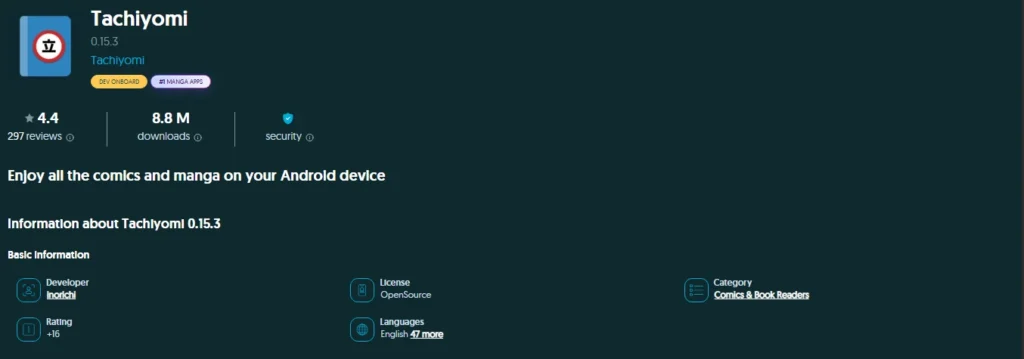
Tachiyomi 0.15.3 is one of the final versions associated with the original Tachiyomi manga reader. Since the original project was discontinued, version 0.15.3 is not a newly released 2026 version. Users looking for Tachiyomi today should understand that development has moved toward community forks and successor apps. Always verify the source before downloading any APK or unofficial release.
Is Tachiyomi Still Updated in 2026? (Tachiyomi vs. Mihon)
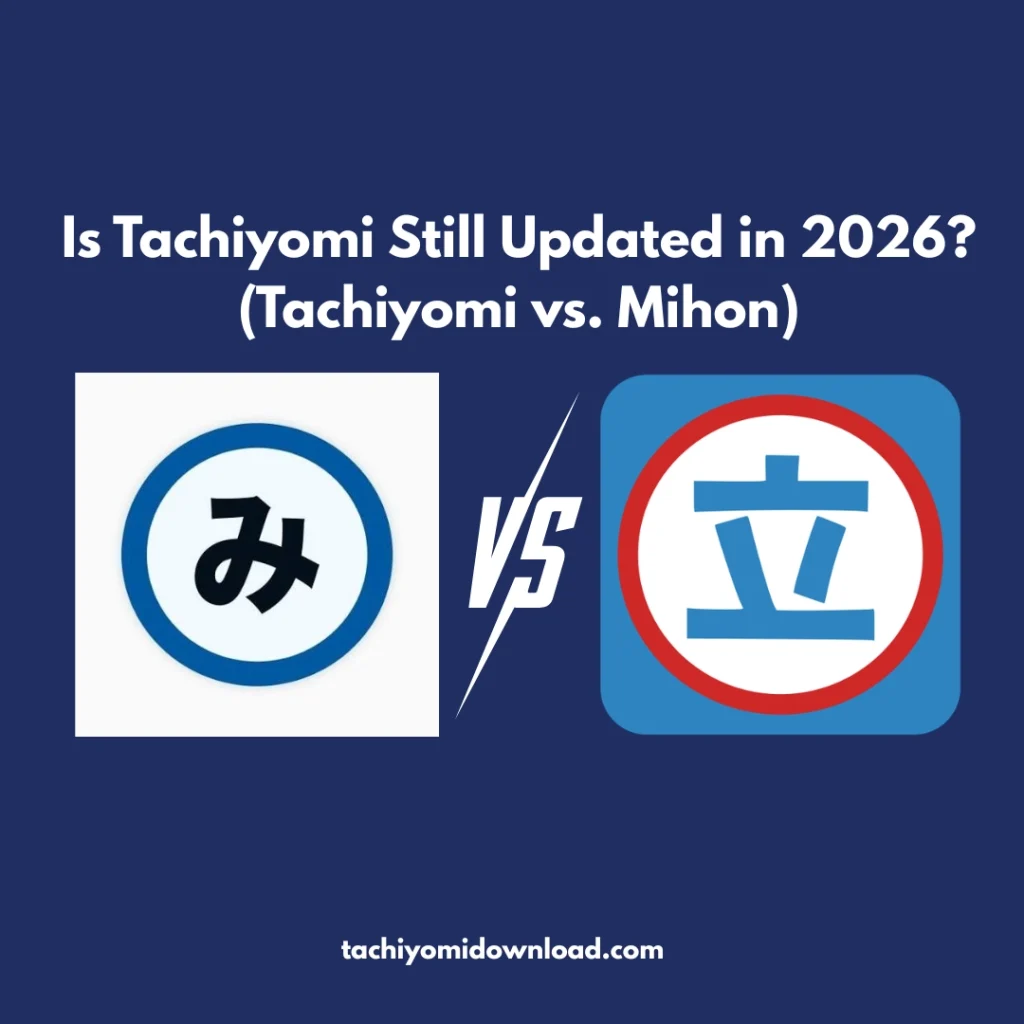
This is the question most people searching for Tachiyomi actually want answered, and a lot of download sites gloss over it: the original Tachiyomi repository stopped receiving official updates in January 2024. The app still runs on most devices, but without ongoing maintenance, some of its extensions can gradually break as manga sites change their own code.
Most of the original development team and community moved their effort into a continuation project called Mihon. Mihon is built by largely the same contributors, supports importing a Tachiyomi backup so you don’t lose your library, and receives active updates. If you’re deciding what to install today, Mihon is generally the better-maintained option, while several independent forks — TachiyomiSY, TachiyomiJ2K, and TachiyomiAZ — continue to offer their own feature variations for users who prefer a specific one.
How Does Tachiyomi Actually Work?
“Fork” simply means a separate project built from Tachiyomi’s original open-source code, each with its own maintainers and feature focus. Here’s how the main ones compare:
| App | Status | Best For |
|---|---|---|
| Tachiyomi (original) | No longer officially updated (since Jan 2024) | Users who already have it installed and don't need new features |
| Mihon | Actively maintained; official successor | Most users switching from Tachiyomi today |
| TachiyomiSY | Actively maintained fork | Power users who want extra filtering and recommendation tools |
| TachiyomiJ2K | Community-maintained fork | Users who prefer its specific UI/UX tweaks |
| Kotatsu / HakuNeko / Kavita | Independent alternative apps | Readers who want a different app ecosystem entirely, including self-hosted library options like Kavita |
Is Tachiyomi Available on iPhone or iOS?
No, Tachiyomi is not officially available for iPhone or iOS. Tachiyomi was an open-source manga reader designed primarily for Android devices, and there has never been an official iOS version in the App Store. iPhone users looking for a similar reading experience need to consider alternative manga reader apps that support iOS. It is also important to avoid websites or downloads claiming to offer an official “Tachiyomi for iPhone,” as these may be unofficial or unsafe. If you already use an iPhone, check the App Store for reputable manga and comic reading applications that provide features such as library management, bookmarks, and offline reading.
Is Tachiyomi Available on Android?
Yes, Tachiyomi was an Android manga and comic reader designed to let users organize and read content from various sources in one place. However, the original Tachiyomi project is no longer actively maintained, so new Android users may want to consider modern alternatives such as Mihon and other community-maintained forks. If you already have Tachiyomi installed, it may continue to work, but compatibility and source availability can change over time. For a safer and more reliable experience, Android users should research currently maintained alternatives and download apps only from trusted, legitimate sources.
Is Tachiyomi Available on Windows?
Is Tachiyomi available on Windows? Not officially. Tachiyomi was primarily designed as an Android manga and comic reader, so there is no native Windows version of the original app. However, Windows users can access similar features through Android emulators that allow Android applications to run on a PC. Another option is to use Windows-compatible manga readers that offer library management, extensions, and offline reading. Keep in mind that Tachiyomi itself has been discontinued, and its successors may have different availability and features. Before installing any third-party version, check the source carefully to avoid modified or unsafe software.
Is Tachiyomi Available on GitHub?
Yes, Tachiyomi was available on GitHub as an open-source manga and comic reader project. However, the original Tachiyomi project has been discontinued, so its main GitHub repository is no longer actively maintained. The project’s source code and history can still be found through GitHub, while several community-developed forks and successor projects continue to exist. If you are looking for Tachiyomi today, be careful when downloading APK files from unofficial websites, as outdated or modified versions may create security risks. Always verify the repository, developer, release history, and download source before installing any Android application.
How to Install an App on All Platforms
Installing an app depends on the platform you use. On Android, download the app from Google Play or a trusted source and follow the installation prompts. On iPhone and iPad, use the Apple App Store. Windows users can install apps through the Microsoft Store or an official installer, while Mac users can use the Mac App Store or a developer-provided package. For Linux, installation methods vary by distribution and may include package managers or official repositories. Always download applications from trusted sources and check system requirements before installing.
Is Tachiyomi Safe? A Responsible-Use Guide
Because Tachiyomi isn’t distributed through the Play Store, “safety” has two separate meanings worth untangling: the safety of the app file itself, and the legitimacy of the content sources you choose to add.
- Install only from official channels: the project's official GitHub releases page or F-Droid. Avoid random third-party "APK download" sites, since these can bundle modified or unverified files.
- Check permissions before installing any APK, and keep your device's "install from unknown sources" setting limited to trusted apps.
- Understand that source legitimacy varies. Because sources are third-party extensions, some connect to officially licensed platforms (MangaDex, for example, distributes content through a public API under its own terms), while others connect to unauthorized scanlation sites. The Tachiyomi app itself doesn't vet the copyright status of any source — that responsibility sits with the source and the user.
- Where possible, favor official and licensed reading platforms to support the creators and publishers behind the manga you enjoy.
The Bigger Picture: Tachiyomi’s Place in the Manga-Reading Ecosystem
To understand why Tachiyomi built such a devoted following, it helps to see where it landed in the broader history of manga apps. Before extension-based readers existed, most manga fans juggled a rotating list of individual websites, each with its own layout, ads, and pop-ups. Dedicated apps existed too, but many of the most popular ones — Manga Rock among them — hosted content directly and eventually shut down under legal pressure, taking users’ libraries with them.
Tachiyomi’s architecture sidestepped that failure mode by design. Because the app never hosted content itself, its survival was never tied to the fate of any single manga site. Sources could disappear or get replaced without breaking the underlying app, and the open-source codebase meant no single company controlled its future — which is exactly why, when the original maintainers stepped back, the community itself was able to keep the project alive through Mihon and its other forks rather than the whole ecosystem disappearing overnight.
That resilience is part of why “Tachiyomi” became more of a category name than a single app — the way “Kleenex” or “Google it” outgrew their original products. Searching the term today surfaces the original app, its official successor, half a dozen community forks, and an entire secondary market of guides and download mirrors, which is exactly the confusion this page is built to clear up.
How We Keep This Guide Accurate
Because this software ecosystem changes quickly — repositories go dormant, forks gain or lose momentum, extensions break — this page is treated as a living document rather than a one-time write-up. Claims about update status, official distribution channels, and fork activity are checked against primary sources (official GitHub repositories and release pages) rather than repeated from other secondary “download” sites, which is where a lot of outdated or inaccurate information about Tachiyomi tends to originate and spread. When something in the Tachiyomi ecosystem changes — a fork goes inactive, a new one emerges, or official distribution moves — this guide is the place that gets updated first, rather than left to quietly go stale like so many competing pages do.
Frequently Asked Questions
Does Tachiyomi host manga content?
No. Tachiyomi is a reader and organizer only. All manga pages are pulled from whichever third-party sources a user installs; the app itself stores no content on its own servers.
Why isn't Tachiyomi on the Google Play Store?
Google Play restricts apps that dynamically pull content from unverified third-party sources, which is exactly how Tachiyomi’s extension system works. That’s why it’s distributed directly via GitHub or F-Droid instead.
What's the difference between Tachiyomi and Mihon?
Mihon is the actively maintained continuation of the Tachiyomi project, built by much of the same community after the original repository stopped receiving updates in January 2024. Mihon supports importing an existing Tachiyomi backup.
Can I transfer my Tachiyomi library to Mihon or another fork?
Yes, generally. Tachiyomi and its major forks share a compatible backup format, so you can export a backup from one app and import it into another.
Is Tachiyomi legal?
The Tachiyomi app itself is legal open-source software, since it doesn’t host any content. Legality instead depends on which third-party sources you choose to connect to within the app.
Does Tachiyomi work without an internet connection?
You need an internet connection to browse and add new chapters, but any chapter you’ve downloaded ahead of time can be read fully offline.
Can I use Tachiyomi on a tablet or Chromebook?
Yes, as long as the device runs Android 6.0 or later (specific version requirements vary slightly by fork), Tachiyomi and its forks will install and run normally.
Final Thoughts
Tachiyomi’s core idea — a clean, ad-free reader that separates the app from its content sources — is what made it so influential in the manga-reading community. With the original project no longer updated, the practical takeaway is simple: understand how the source system works, install only from official channels, lean toward Mihon or an actively maintained fork if you’re starting fresh today, and be thoughtful about which sources you connect. Explore our setup guides and fork comparisons linked below to go deeper on any of these topics.